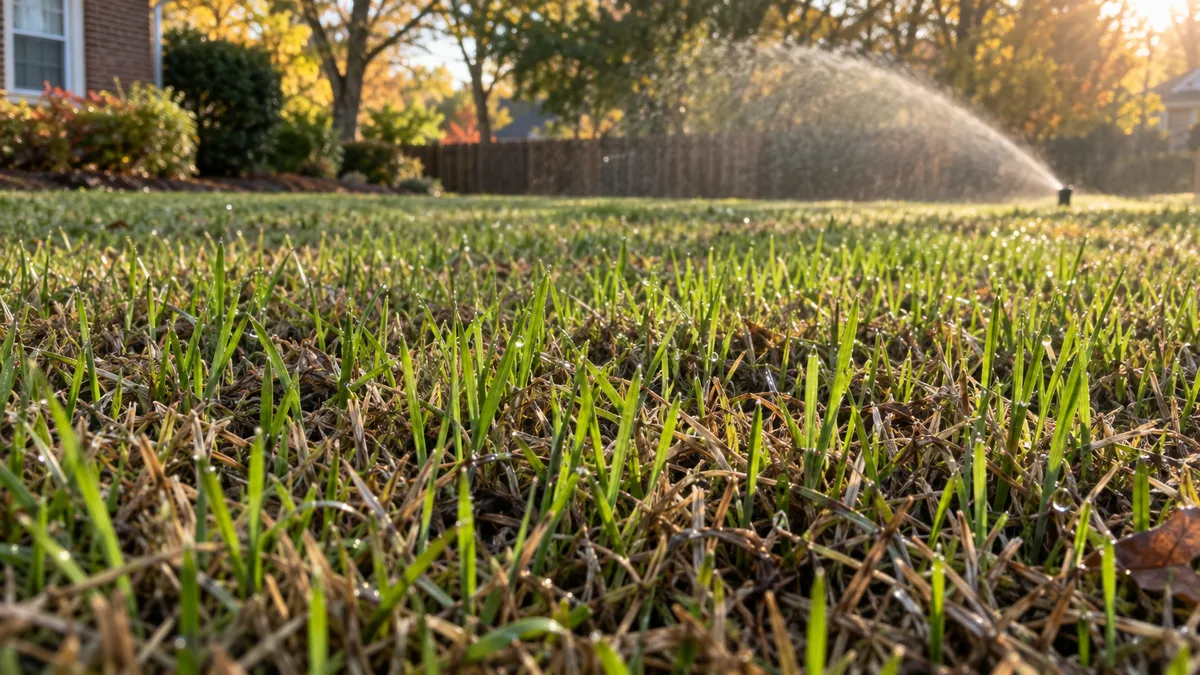
Overseeding with Ryegrass in Greenville, SC: How to Water It So It Takes
Overseeding with Ryegrass in Greenville, SC: How to Water It So It Takes
If you've overseeded your dormant bermuda or zoysia with ryegrass this fall, the next two to three weeks are the most critical stretch for your lawn. Watering an overseeded lawn in Greenville, SC is different from everything else you've done with your sprinklers all year — and getting it wrong means patchy, thin ryegrass that never fills in the way you hoped.
The good news is that ryegrass is tough and germinates quickly in Upstate fall temperatures. But it needs one thing above everything else: consistent moisture in those first weeks. If the seed dries out even briefly during germination, it stalls or fails. Your irrigation system is the most important tool you have right now.
Not sure your sprinkler coverage is ready for overseeding? Give R&L Irrigation a call at (864) 907-1708 — same-day service is available Monday through Saturday and we can check your coverage and program your controller for ryegrass.
Why Watering an Overseeded Lawn in Greenville SC Is Different
Your normal irrigation routine — deep, infrequent watering to encourage deep roots — is the opposite of what newly overseeded ryegrass needs. Fresh ryegrass seed sits at or just below the soil surface. It can't pull moisture from deep in the root zone because it doesn't have roots yet. It depends entirely on what's happening in the top inch of soil.
That means your goal in the first two to three weeks after overseeding is to keep the soil surface consistently moist — not soggy, not dry — from the moment the seed goes down until it has germinated and begun to establish. Short, frequent watering cycles are the tool that gets you there.
The Two-Phase Watering Plan for Ryegrass
Phase 1: Germination (First 2–3 Weeks)
During the germination window, your priority is keeping the seed moist. Here's how to approach it:
- Run shorter cycles more frequently. Instead of one long deep soak, run your zones in shorter bursts once or twice a day, depending on weather and sun exposure. The goal is to keep the top inch of soil moist without puddling.
- Check exposed or sunny areas more closely. South-facing slopes and open areas dry out faster than shaded spots. If you have zones that cover both, pay extra attention to the drier sections.
- Adjust for rain. If Greenville gets a good rain, skip a cycle. Standing water on fresh seed can cause it to wash, shift, or rot. Check your yard after a rain to make sure seed hasn't pooled in low spots.
- Don't skip days. A day or two of dry conditions in the first week after seeding is enough to stall germination in many spots. Consistency matters more than volume during this phase.
Phase 2: Establishment (After Germination Through Fall)
Once your ryegrass has visibly sprouted and begun to fill in — usually within two to three weeks in Upstate SC fall temperatures — it's time to shift your irrigation approach:
- Transition to deeper, less frequent watering. Now that the grass has roots, you want to encourage them to grow down. Longer, less frequent cycles help with this.
- Water only when rain isn't doing the job. Established ryegrass doesn't need daily irrigation. Monitor rainfall and run your system when the lawn shows signs of drying out.
- Cut back significantly as temperatures drop toward winter. Cool temperatures slow evaporation and the grass's water demand drops. Overwatering in late fall and winter can promote shallow roots and disease.
Want us to program your controller for the overseeding phase and set up reminders to transition? Request a no-obligation quote — we'll get your system set up right before the seed goes in the ground.
The Biggest Reason Overseeded Ryegrass Fails: Uneven Coverage
Across Greenville, Greer, and Simpsonville, the most common reason overseeded ryegrass comes in patchy isn't the seed — it's the sprinkler system. A single misaligned head, a clogged nozzle, or a rotor that stops mid-arc can leave a section of your lawn without adequate moisture during germination. That area simply won't fill in the way the rest does.
The tricky part: coverage gaps that were invisible all summer — because rain filled in the gaps — become obvious during overseeding season when every square foot needs consistent water. Before you seed, it's worth running each zone and watching for:
- Dry arcs or sections within a zone's coverage pattern
- Heads that don't pop up fully or spray weakly
- Rotors that stop turning partway through their arc
- Zones that seem to miss corners or edges entirely
Fixing these issues before you seed is far more effective than trying to correct patchy germination after the fact.
Adjusting Your Controller for Overseeding
If your irrigation system has a standard programmable controller, you'll need to update your schedule when you overseed and again when germination is complete. Here's what that generally looks like:
- Create a separate overseeding program if your controller supports multiple programs. This lets you flip between the germination schedule and your normal schedule without reprogramming everything.
- Shorten run times and increase frequency for each zone during Phase 1. Exact times depend on your heads, pressure, soil, and sun exposure — adjust based on how quickly the surface dries.
- Set a reminder to transition to Phase 2 watering once germination is visible, typically two to three weeks after seeding in Upstate SC fall conditions.
- Use a rain sensor or smart controller to automatically skip cycles when Greenville gets meaningful rainfall. This is especially helpful during the overseeding window when over-watering can be as harmful as under-watering.
When to Call a Pro
If you've seeded and watered faithfully but the ryegrass is still coming in patchy or thin, the problem is almost always coverage — not the seed or your watering schedule. An irrigation inspection can identify misaligned heads, clogged nozzles, or zones that aren't performing the way they should.
R&L Irrigation provides irrigation repair and installation across Greenville and the Upstate. We can check your coverage, fix any head or valve issues, and program your controller for the overseeding phase — so you get the most out of the seed you've already put down. Same-day service is available Monday through Saturday.
FAQ: Watering Overseeded Lawns in Greenville, SC
How often should I water after overseeding in Greenville?
During the first two to three weeks after overseeding, keep the seed consistently moist with short cycles run once or twice a day, depending on sun exposure and weather. Once the ryegrass has germinated and begun to fill in, transition to deeper, less frequent watering. The exact schedule depends on your system, soil type, and local conditions.
Do I need to water ryegrass differently than my regular lawn?
Yes — newly seeded ryegrass needs short, frequent watering to keep the soil surface moist during germination. This is the opposite of the deep, infrequent watering that established turf prefers. Once the ryegrass is up and rooted, you can shift back to a more normal schedule.
Why is my overseeded ryegrass patchy even though I watered it?
Patchy ryegrass after overseeding almost always points to uneven sprinkler coverage. A clogged head, misaligned rotor, or underperforming zone can leave sections of the lawn without enough moisture during germination. An irrigation inspection can identify and fix the issue quickly.
When should I stop watering ryegrass in winter in Upstate SC?
Once your ryegrass is established, reduce watering significantly as temperatures cool. In most Upstate SC winters, established ryegrass needs little supplemental irrigation unless there's an extended dry stretch. Monitor conditions and run your system only when the lawn clearly needs it.
Get Your Ryegrass Off to the Right Start
Watering an overseeded lawn in Greenville, SC takes a different approach than anything else you do with your sprinklers all year — but it's not complicated once you understand the two phases. Keep the seed moist during germination, transition to deeper watering once it's up, and make sure your system's coverage is even before the seed ever hits the ground.
If you're not confident your system is up to the job, now is the time to find out — before the seed is down and the window is closing.
R&L Irrigation has served Greenville, Mauldin, Simpsonville, Greer, Fountain Inn, and the surrounding Upstate for 25+ years. Call (864) 907-1708 or request your quote today — we're available Monday through Saturday, and same-day service is often available.
